Case Study
How I helped turn a simple pitch into a multi-million dollar campaign.
When adidas UK began looking to refresh a previous Ultra Boost campaign, the product itself wasn’t the problem. The Ultra Boost already carried recognition and credibility within the performance footwear market. What had shifted was momentum. Familiarity had softened its edge, and the brand needed a way to reintroduce the revamped 4.0 with renewed energy.
Initially, the pitch was scoped as a contained promotional asset–a sharp, high-impact visual execution designed to reframe the product. But even at that stage, I saw room for scale. The strategy wasn’t just to win the brief; it was to seed a larger ecosystem within the idea itself, creating natural expansion points that could grow both the campaign surface area and the agency’s scope of work.
-
Read Time
5 minutes
-
Scope
Omni-Channel
-
Role
Creative Strategist
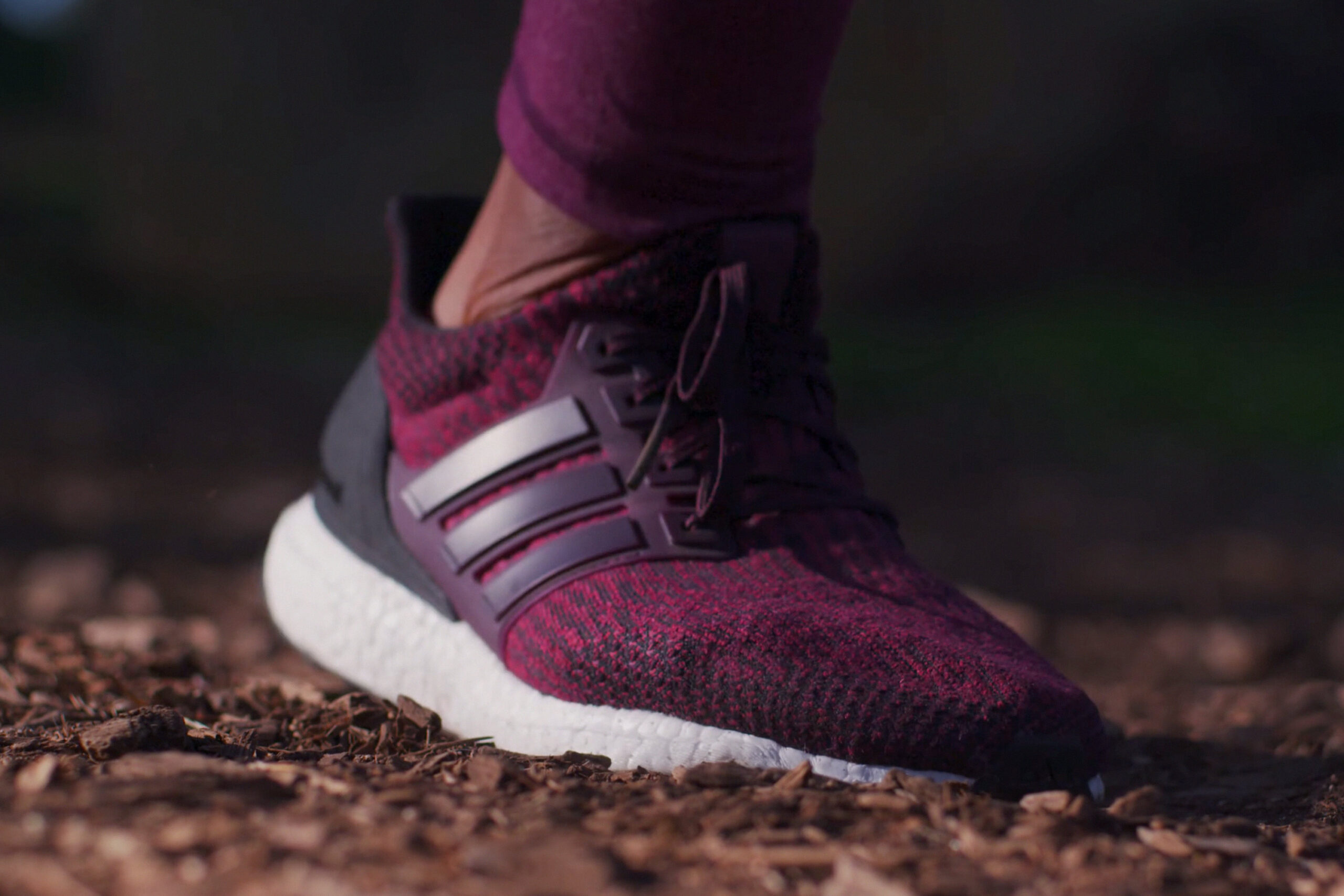
Rather than over explain the shoe’s technical details, we focused on placing it back into real urban environments–cinematically, with restraint. The goal was to evoke intrigue rather than over-sell. The call-to-action needed to remain soft; the energy needed to feel earned.
The creative strategy operated on two levels.
First, we established a cohesive ethos so every asset would feel systematically connected, like companion pieces in a larger campaign puzzle, each piece evoking a certain emotional connection and call-to-action based on channel display.
Second, we structured the concept in a way that allowed the production budget to grow. By demonstrating how the idea could stretch across multiple touch points, we positioned the campaign not as a single deliverable, but as a scalable system capable of supporting a larger Q3 investment.
This is the pitch that showed adidas the feel we were going for.

Establishing a solid visual core.
Photography became the structural backbone of the rollout. The imagery felt authentic and kinetic, grounded in real environments rather than studio polish. That authenticity gave the campaign texture and credibility from the start.
From there, we defined a disciplined visual language: high contrast, tight framing, controlled grit. The intention wasn’t to create noise, but clarity at speed, visuals strong enough to command attention whether on a phone screen, a microsite, or a city wall.
Each extension of the campaign pulled from the same narrative core. The system held together because it was built that way from the beginning.
Creating the interactive layer.
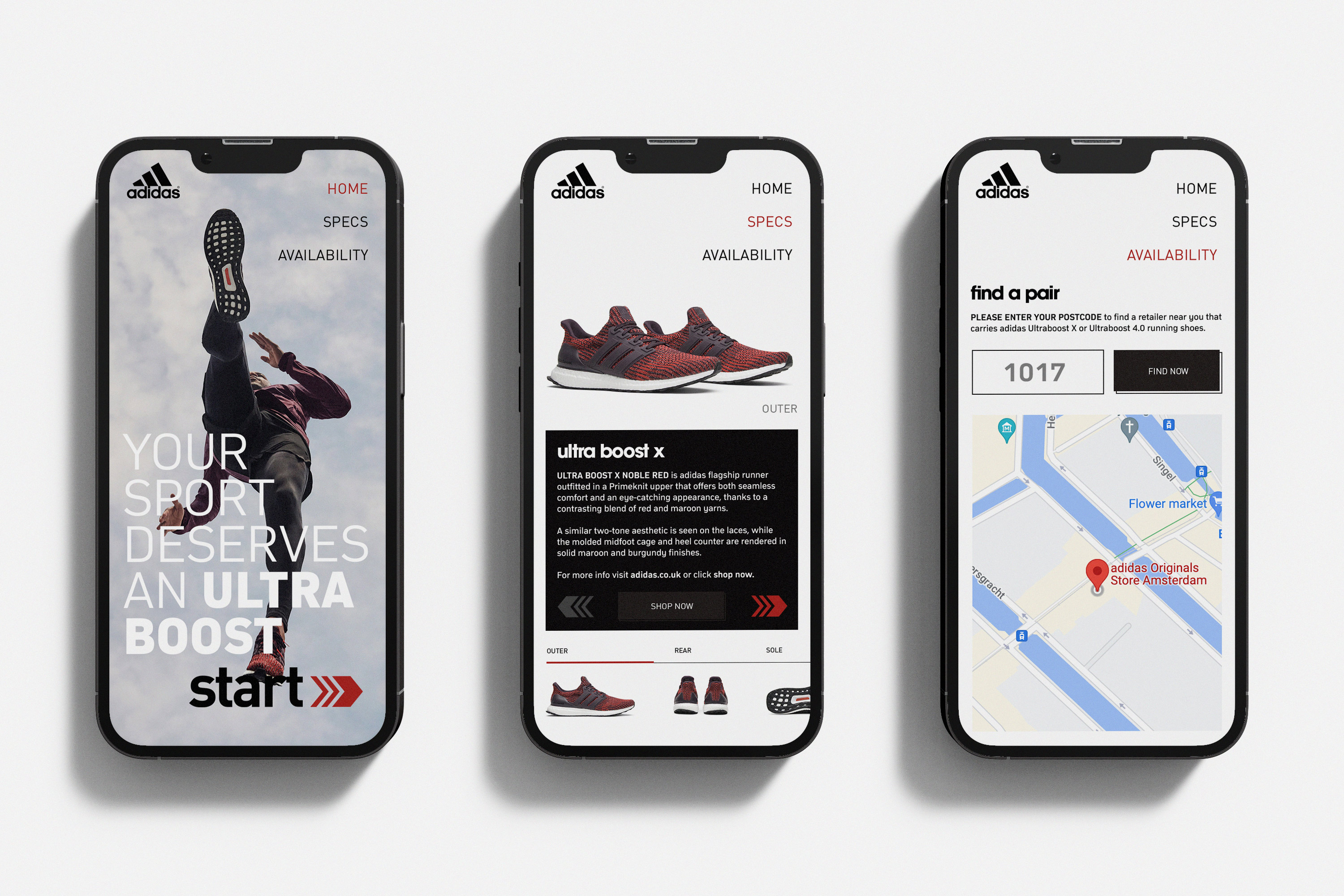
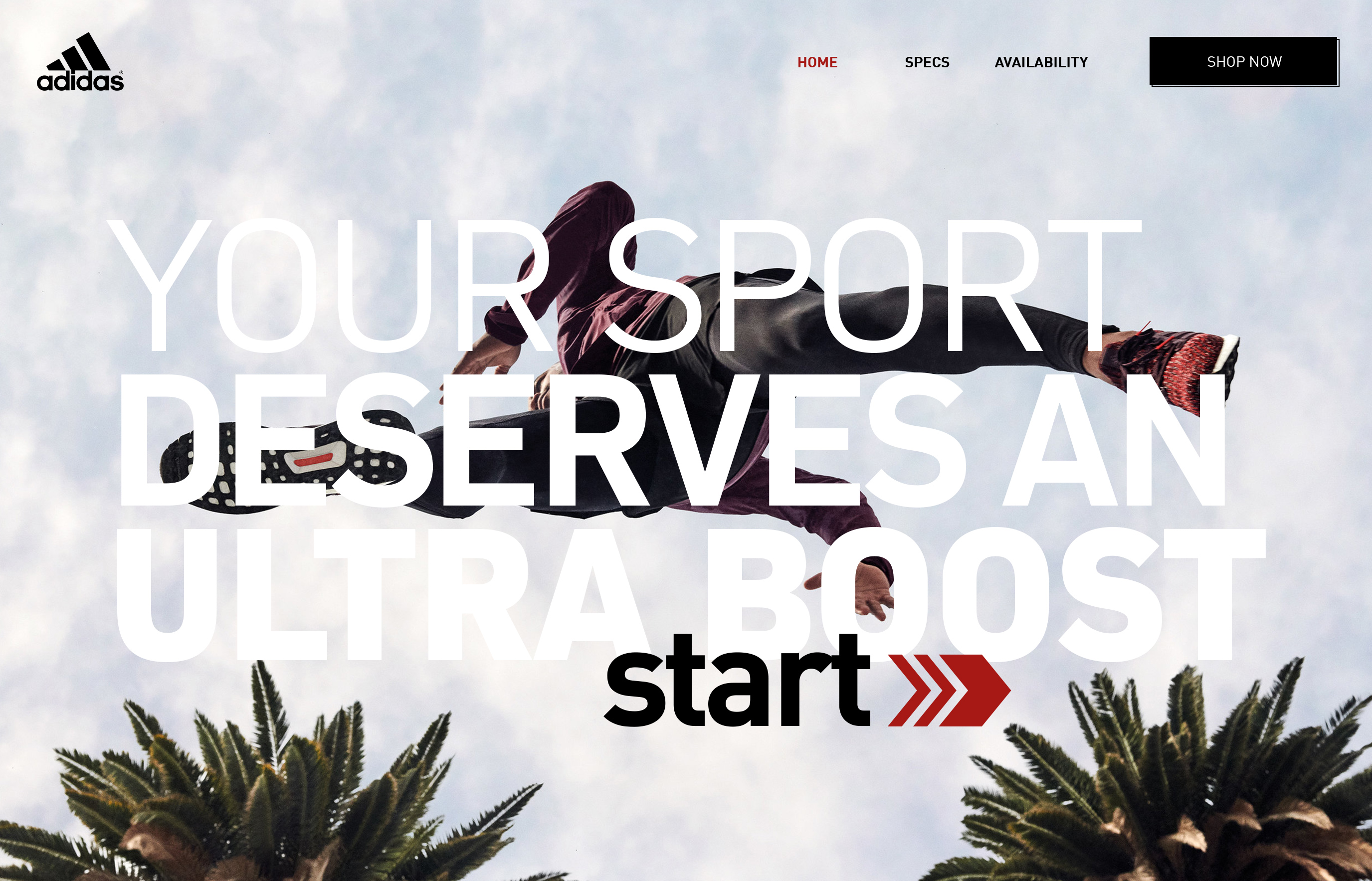
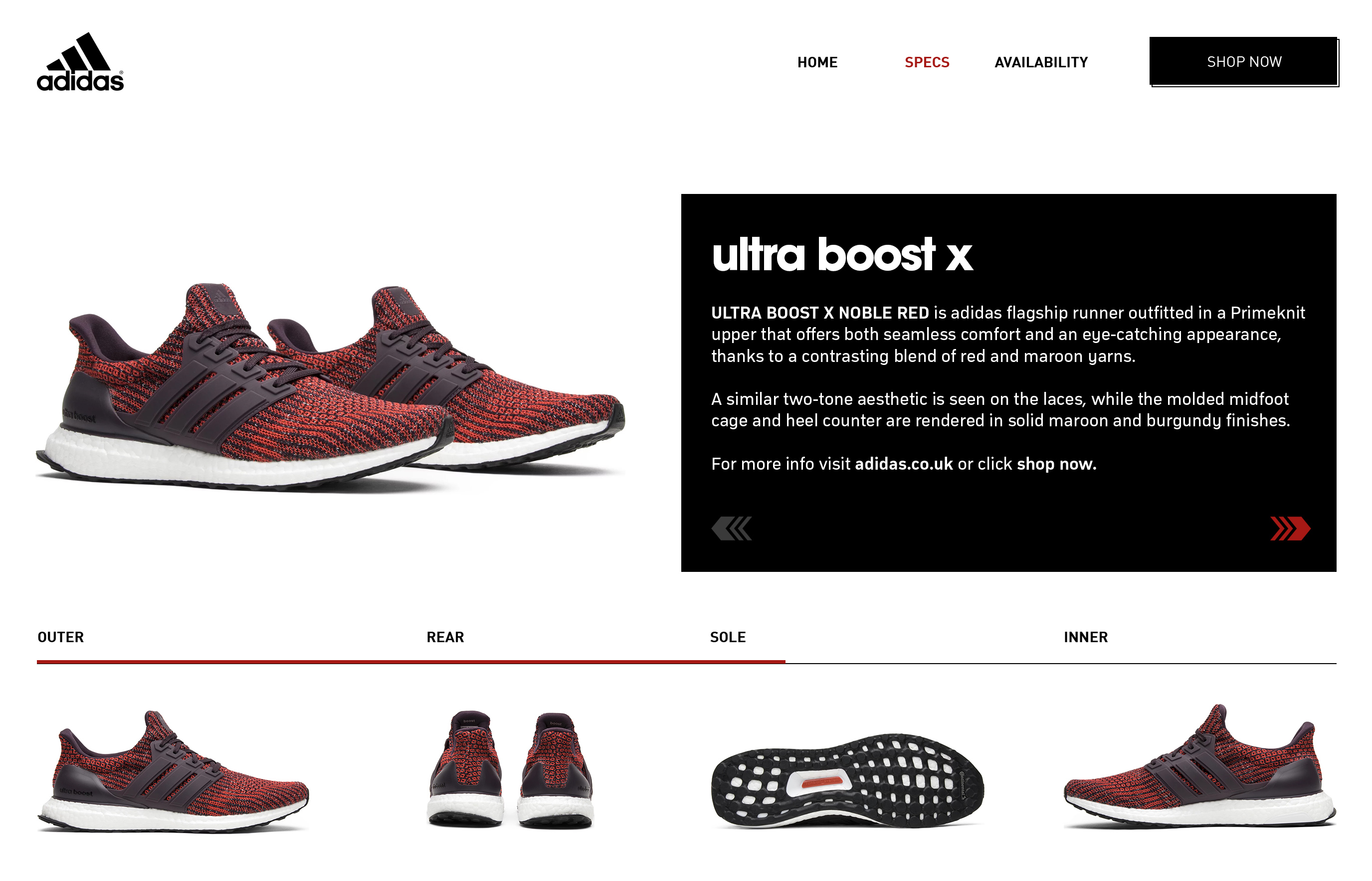
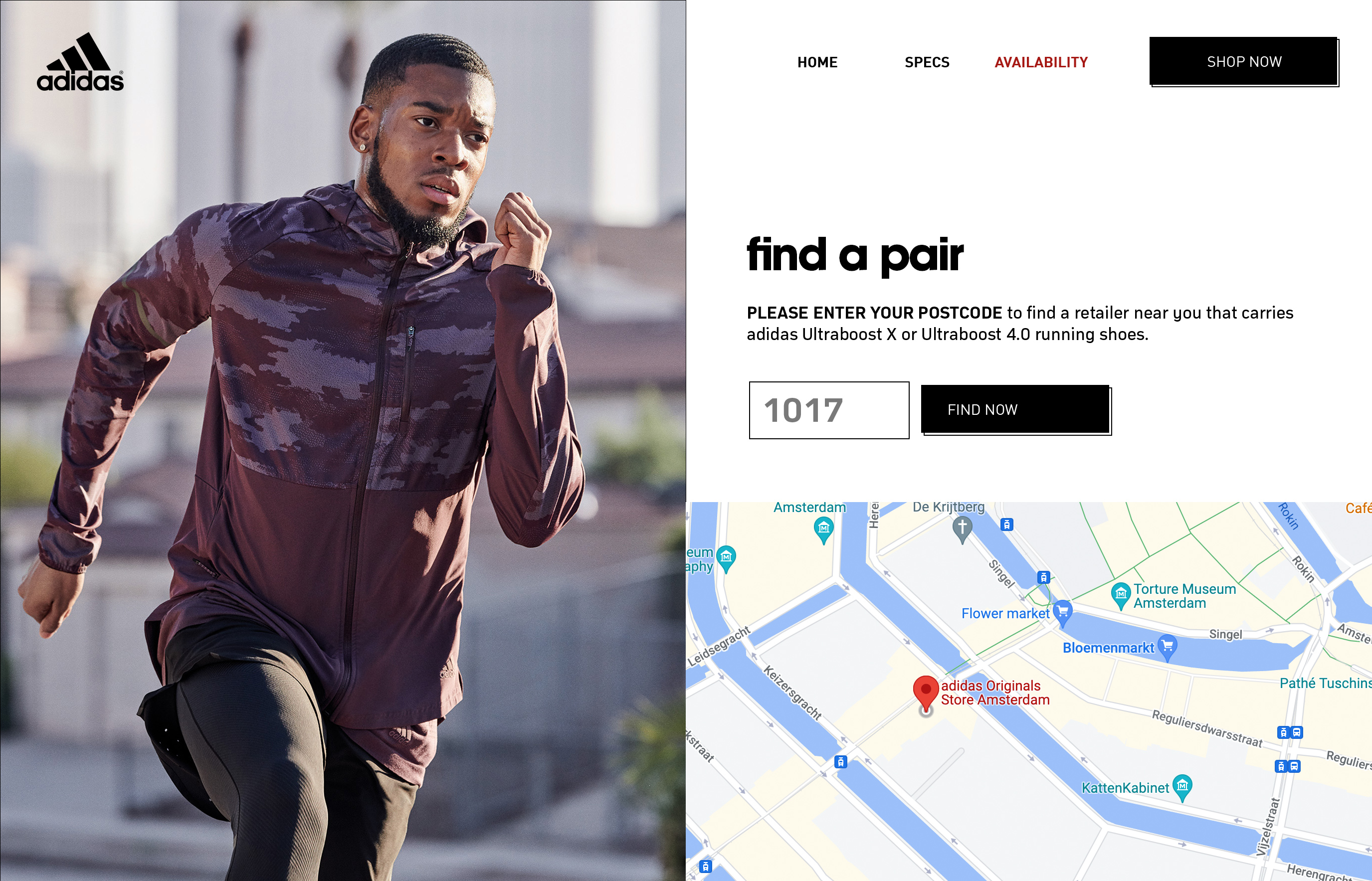
Rather than directing paid traffic into a standard product page on adidas (UK), we built a focused, mobile-first microsite that became the primary call-to-action across every touchpoint–video, paid ads, PPC, and social channels.
The experience was streamlined to reduce friction between inspiration and purchase. Product focus. Store locator. Minimal distraction. The microsite functioned as an interactive ad environment sales funnel rather than a passive landing page.
Primarily built for mobile...
...but also for desktop.
Quick Stats
7 Day Avg. - 980k, 48% CTR
7 Day Avg. - 680k, 39% CTR
Sharing the story online.
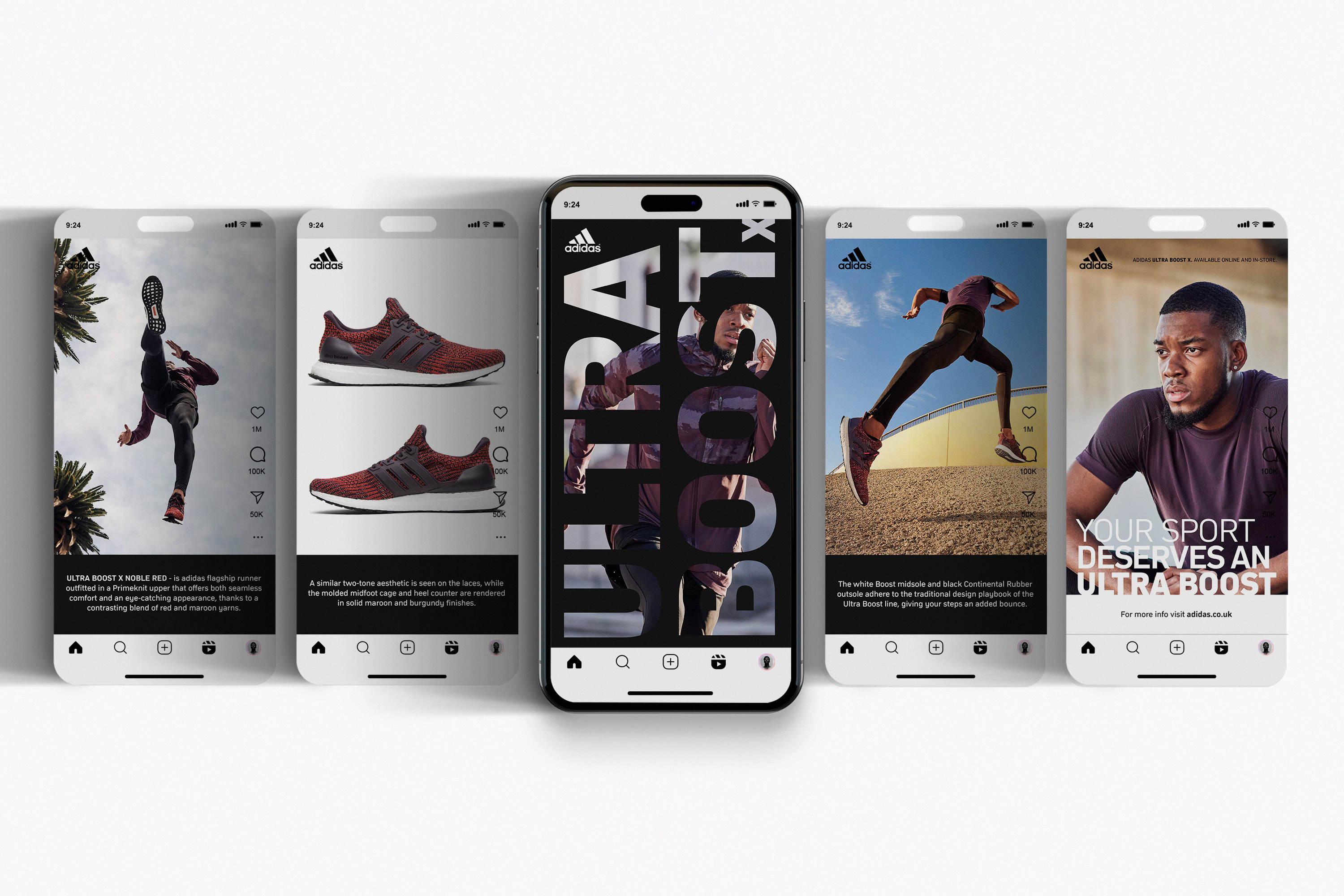
The promoted reels leaned into mood over message. Quick, branded executions designed to feel native within the feed rather than interruptive. The pacing was deliberate. The product remained present, but never forced, social perfection.
The goal was to maintain intrigue while reinforcing identity, ensuring that even short-form content felt like part of a larger system rather than isolated ads.
Quick Stats
7 Day Avg. - 1.1M impressions
Bringing the story to life in the world.
To complete the arc, the product needed to exist beyond screens. It wasn’t enough for the Ultra Boost 4.0 to live in digital environments; it had to show up physically where runners actually move.
The OOH layer became both traditional and tactical, urban placements, city walls, editorial spreads, and street-level wheatpaste installations strategically positioned in high-traffic urban corridors.
Each placement was considered within context. We weren’t simply scaling visibility; we were reinforcing proximity. The same visual system that anchored the digital experience carried into the physical world, ensuring cohesion across mediums while allowing the environment itself to add creative texture.
The Ultra Boost 4.0 returned to the spaces it was designed for–pavement, concrete, movement. Not staged. Not overly polished. Not removed from context. Just reality, amplified.
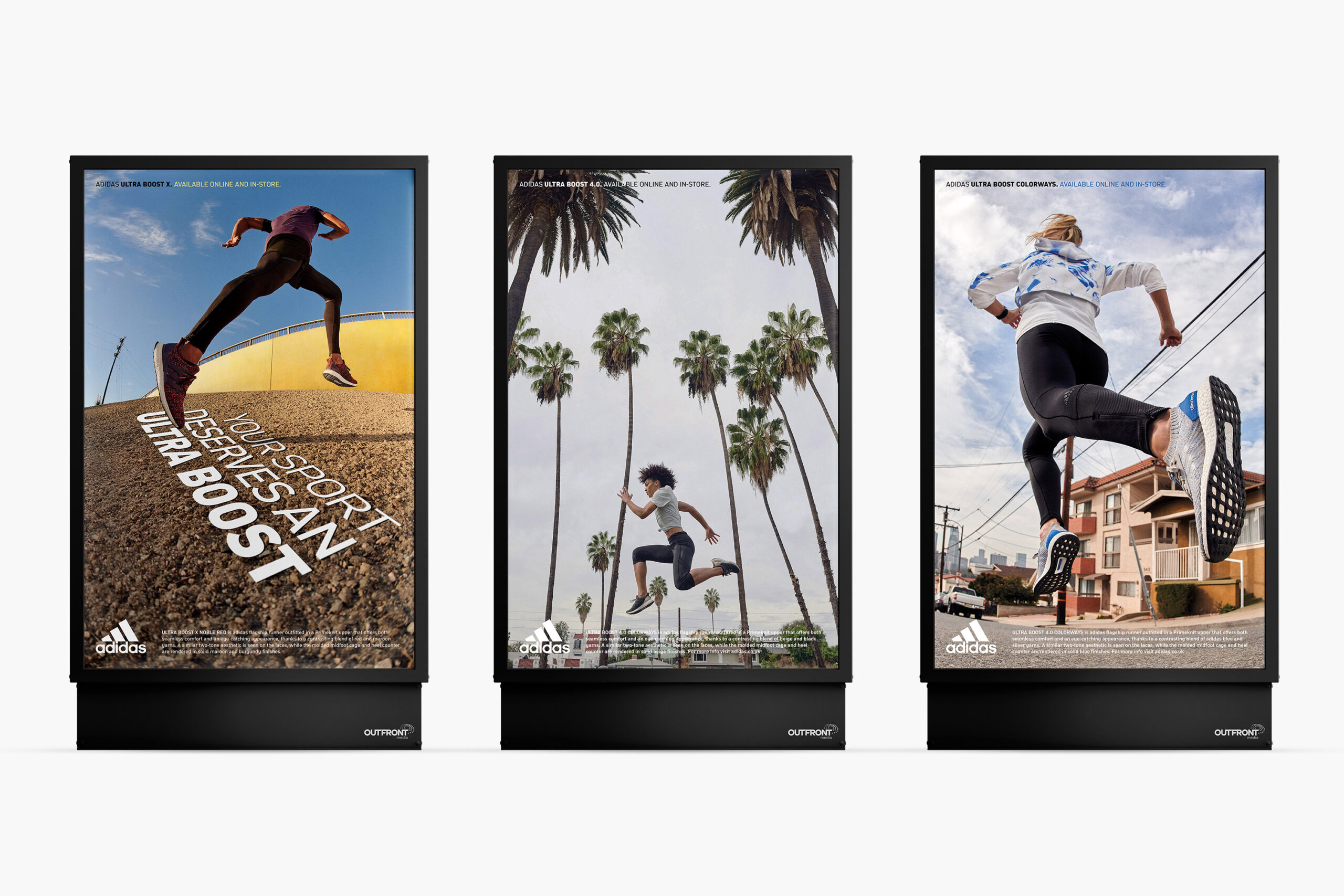


Across digital and physical placements, microsite impressions surpassed 4M.
Also, in regions where OOH activations were live, retail locations reported a 15% lift in sales during the initial campaign window (30 days).

Building the system first–and letting scale follow second.
By the time the campaign reached full rollout, the production budget had grown to approximately $1.5M, supported by a $2.5M UK media buy and a 26-person cross-functional team. Every element originally pitched was executed.
What began as a focused promotional pitch expanded into a fully realized omni-channel campaign because the idea was structured that way from the beginning. It wasn’t a single asset looking for extensions. It was a system designed with room to grow–across digital, social, retail, and street.
My role as Creative Strategist wasn’t just to shape the visuals. It was to architect the opportunity. To recognize that if the narrative was strong enough, it could carry more investment, more channels, and more ambition without losing coherence.
That’s what happened here.
- The idea earned the budget.
- The system justified the scale.
- And the campaign moved from pitch to platform because it was built to.
-
Client
adidas UK (TBWA)
-
Market
United Kingdom
-
Investment
$4M+ Total Campaign
Check out another project.